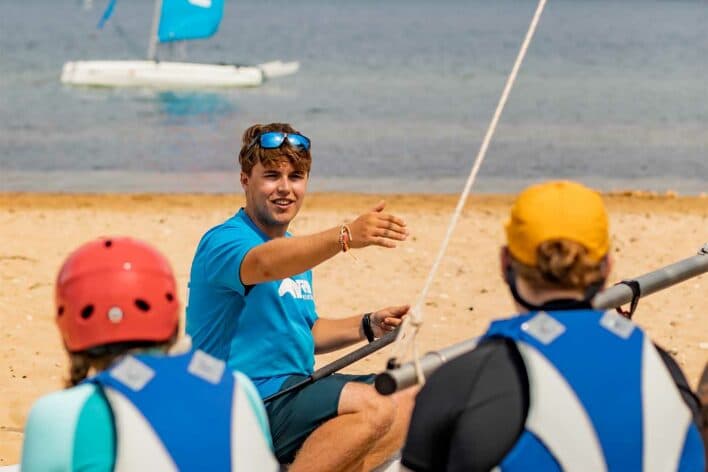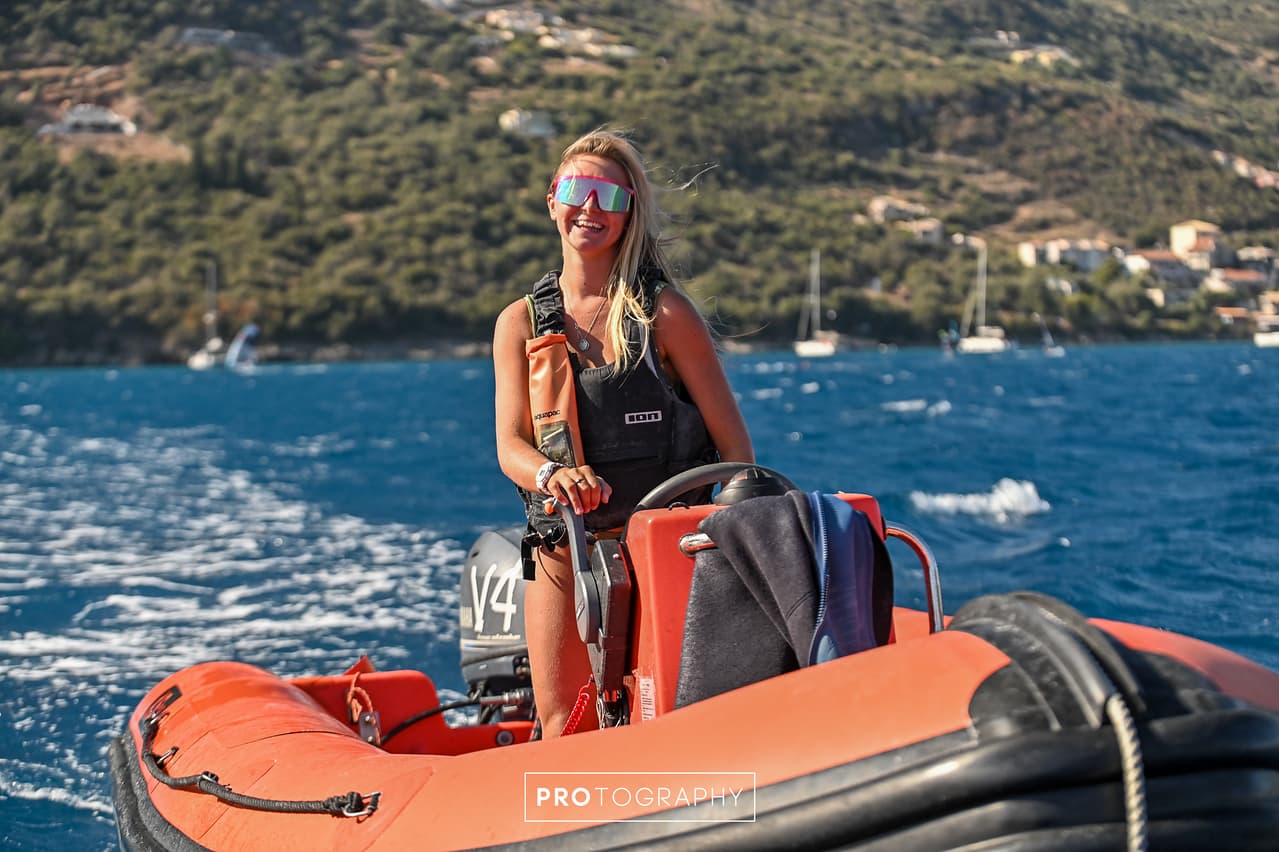
Thinking about training to become a watersports instructor? Have a passion for windsurfing, sailing or wingfoiling? Find out the options.
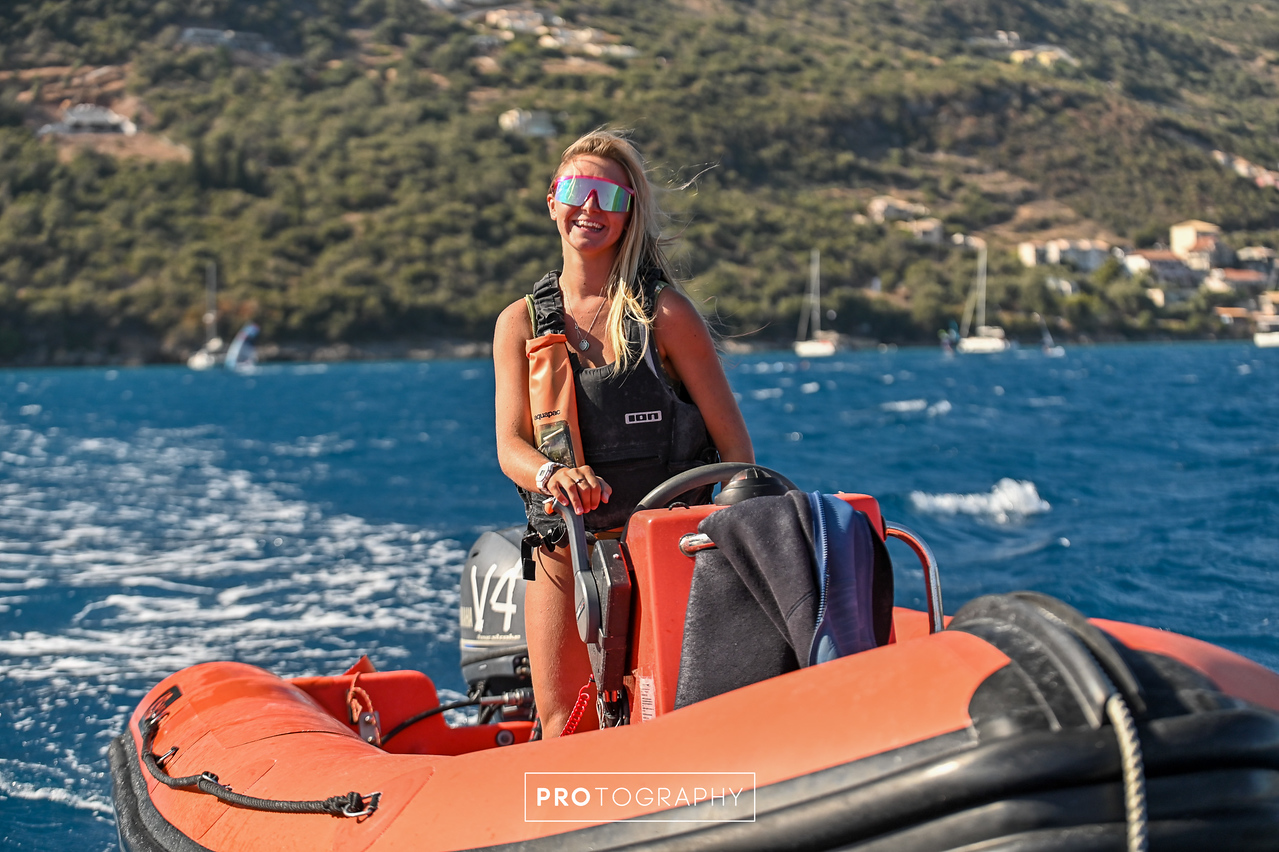
It’s easy to look at watersports instructors- living active, outdoor lives, soaking up the sun, and travelling the world, and wonder, “Could I do that too?” The answer is yes. Becoming a watersports instructor is actually far more achievable than most people think. You don’t need to have started as a toddler, nor do you have to give up your studies or current career path. In fact, with the right course, you could be qualified in as little as six weeks, even if you have no previous experience.
So, if you’re looking for a career or lifestyle shift that takes you from the indoors to the ocean, where every day is shaped by the wind, waves, and weather, this is the path for you. Whether you’re a surfer, windsurfer, sailor, or simply someone drawn to the water, becoming a watersports instructor could be your gateway to a life of adventure.
In this guide, we’ll walk you through exactly what it takes to become a certified watersports instructor, from qualifications and training to job opportunities and what day-to-day life is really like on the water.
Why Become a Watersports Instructor?
Deciding to become a watersports instructor might be a no-brainer for some, or it might take a little encouragement. Either way, we’re here to break down the key reasons this could be the perfect path for you.
Outdoor Lifestyle
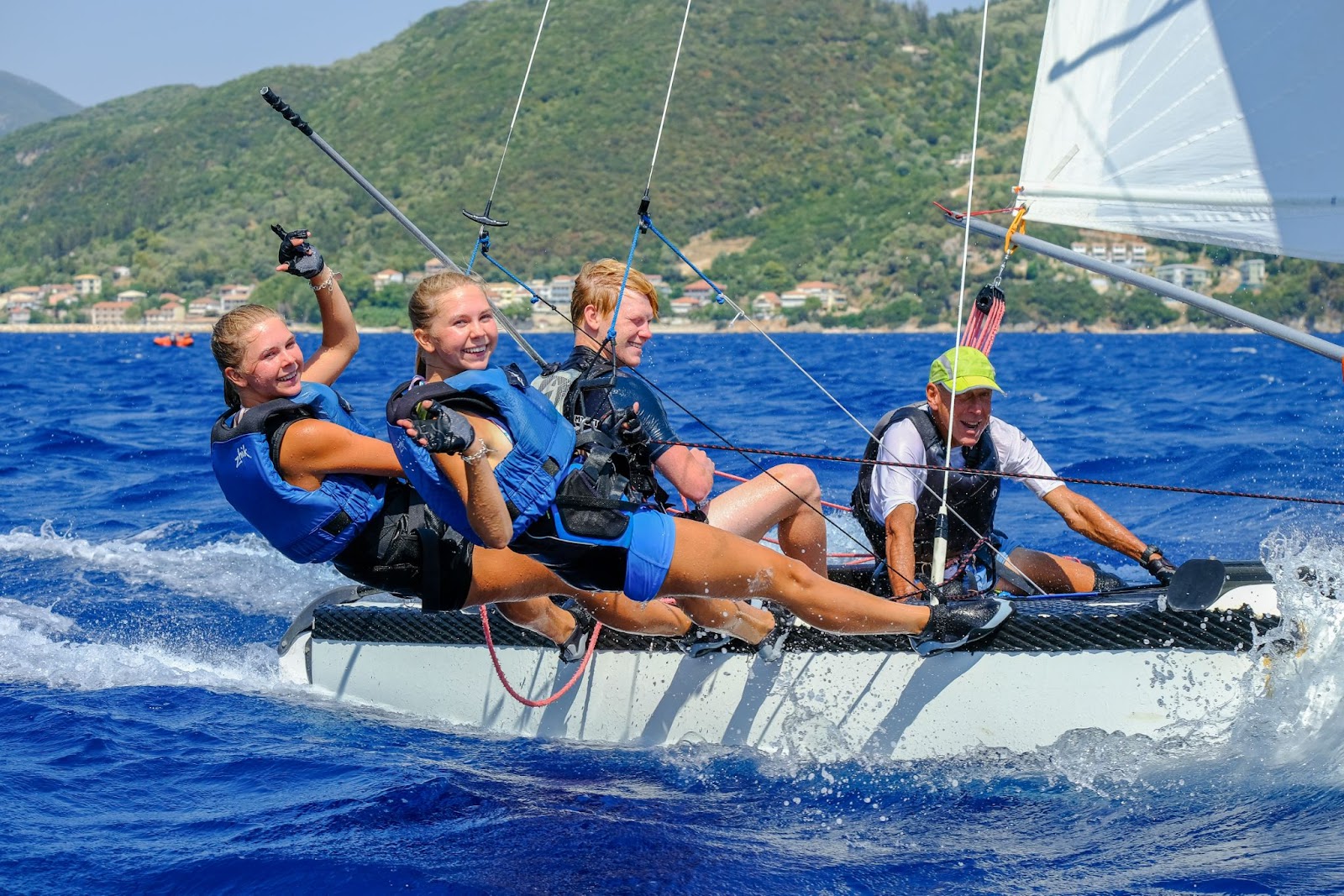
If you love being outside, whether it’s sunny, windy, or a bit wild, becoming a watersports instructor means you get to live that lifestyle every day. From safety cover on a powerboat to demo sessions on simulators, the role keeps you immersed in the outdoors. Whether you’re windsurfing, sailing, or teaching on shore, the natural environment becomes your workspace.
Stay Active
Teaching a sport means doing the sport. You’ll spend a good portion of your day physically active, demonstrating skills, refining your own technique, or supporting centre operations. It’s an energising way to stay fit without setting foot in a gym.
Travel Opportunities
Few careers open the door to the world quite like this one. If you’re dual-qualified in windsurfing and sailing, you’re even more in demand. With centres located globally, you’ll find opportunities to live and work in stunning coastal spots, places that many people only visit on holiday. It’s a lifestyle that combines purpose, passion, and exploration.
Meet Like-Minded People
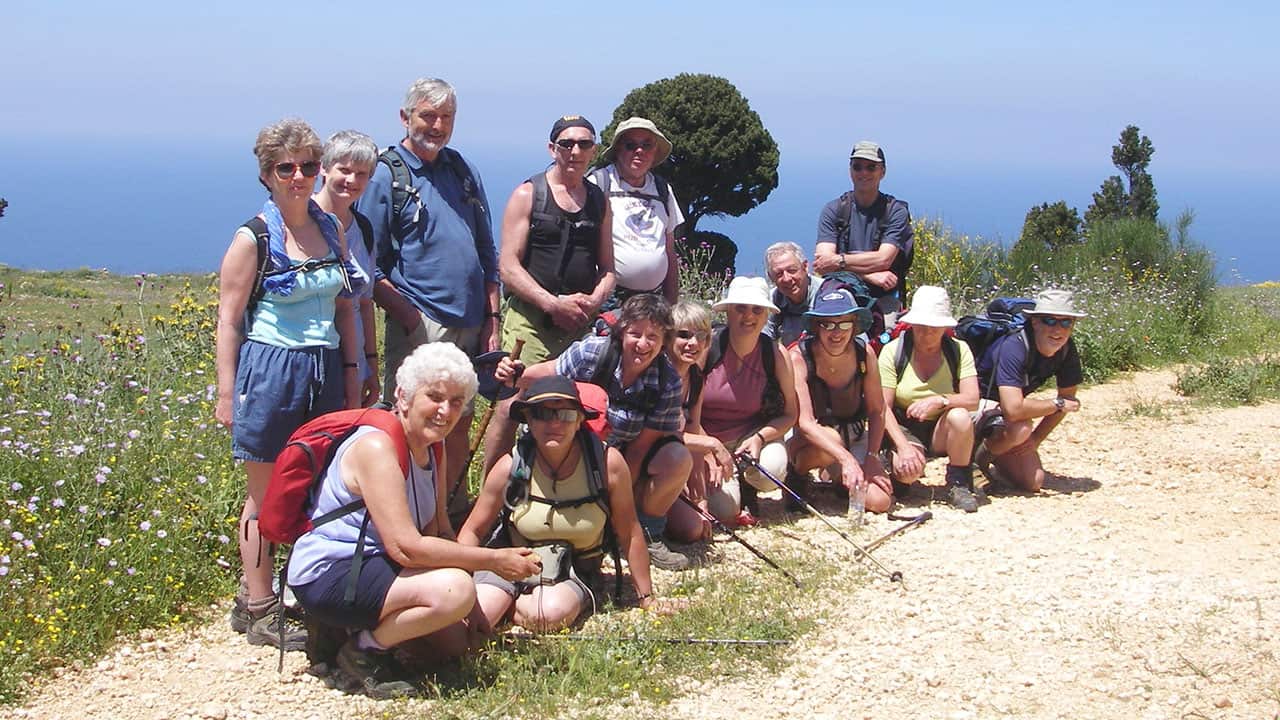
Watersports attract a unique kind of community, people who love the sea, thrive in the outdoors, and have a shared sense of adventure. The connections you make can turn into deep friendships, travel companions, and lasting memories. It’s a job where your team becomes part of the experience, both in and out of work.
What is like Training in Greece?
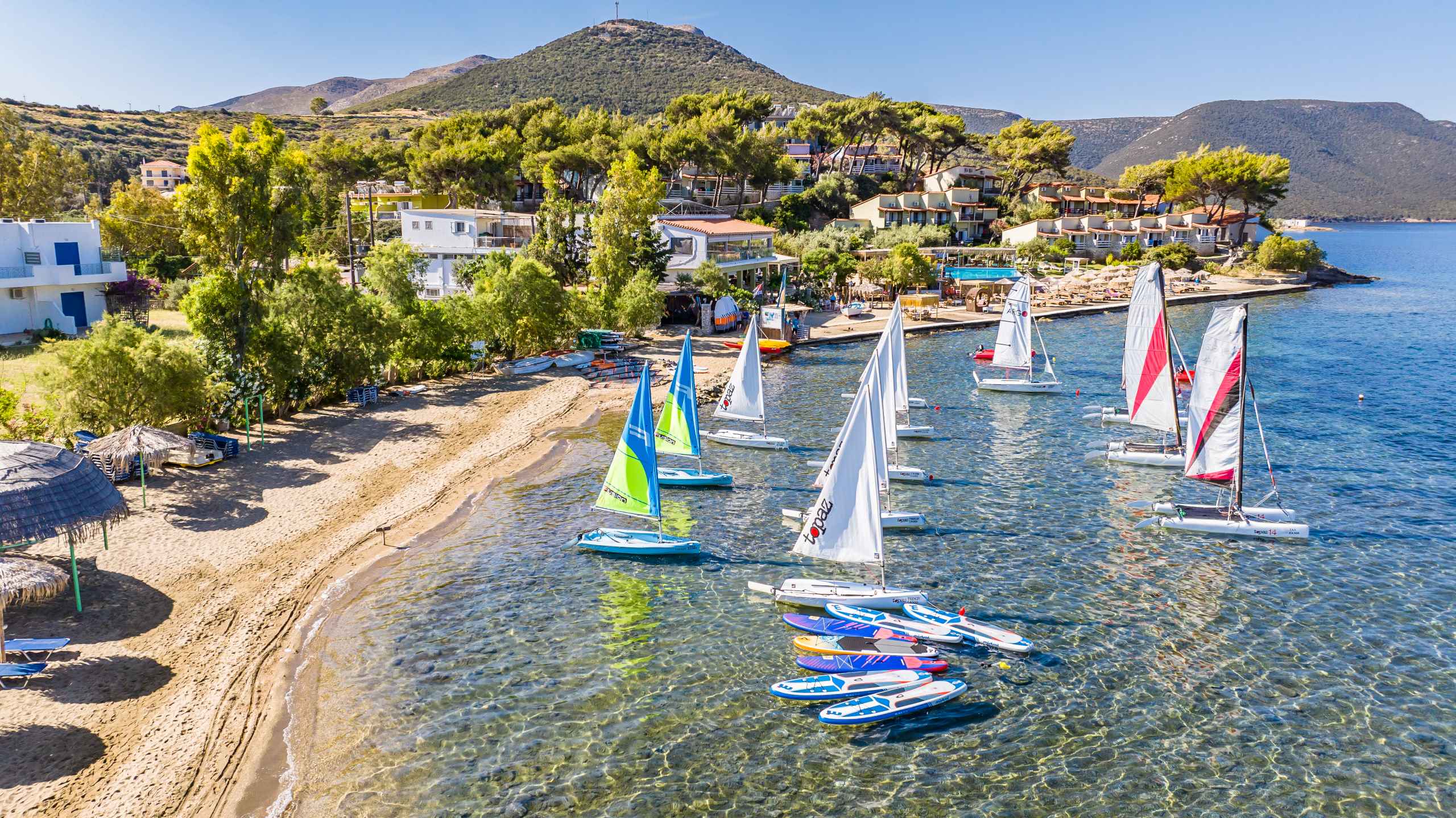
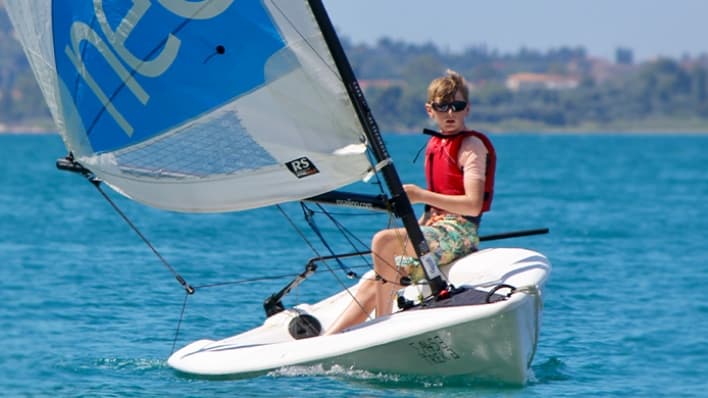
There are many options of places to train to become an instructor. But somewhere we highly recommend is training in Greece. The summer months are the perfect classroom for learning the skills and requirements to become an instructor and with all both windsurf, wingfoling and sailing instructor courses available, you could fly out with no experience and come home with all the tickets you need to apply for jobs in watersports.
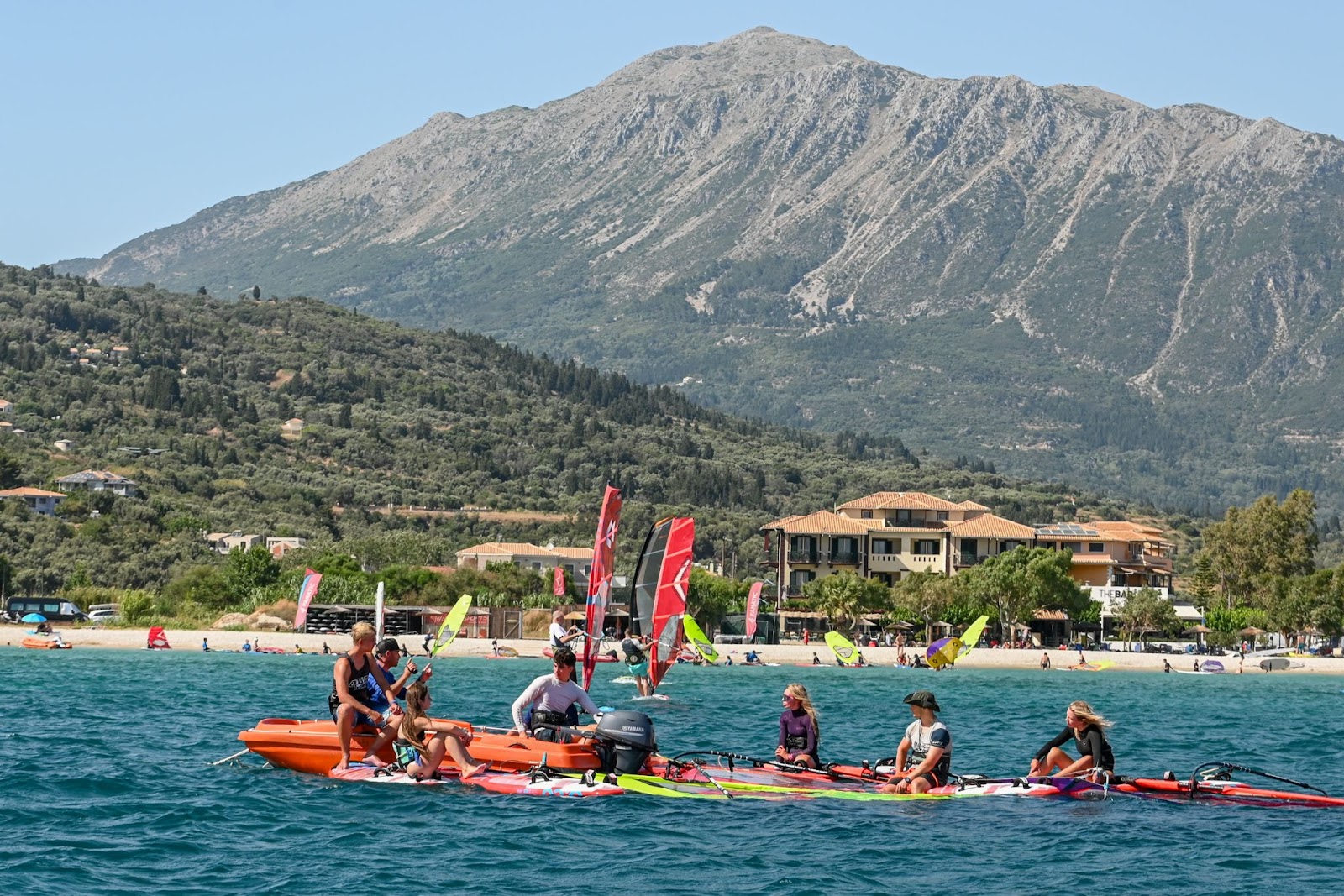
Here are some of the most popular spots in Greece for training to become an instructor.
Vassiliki
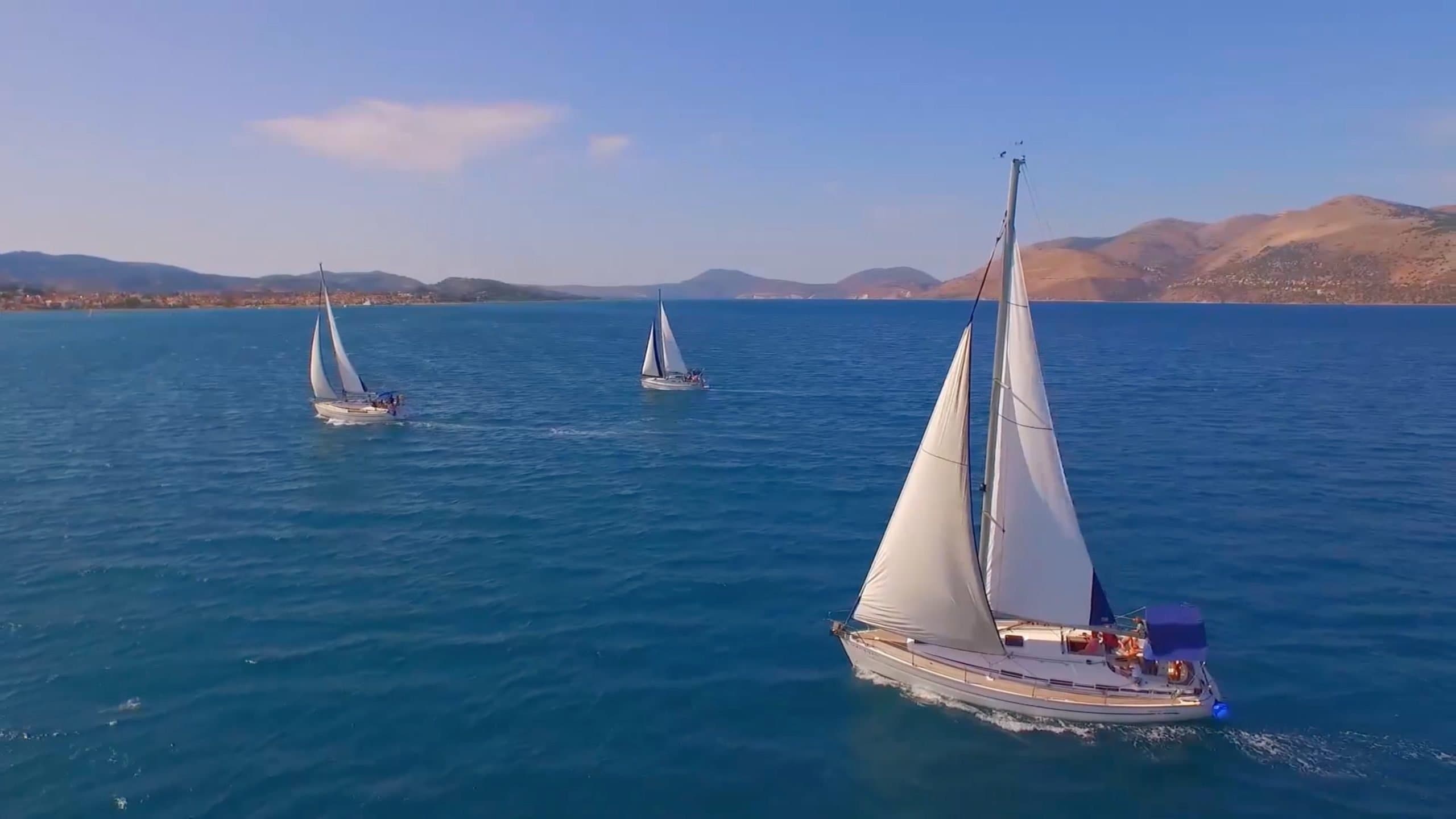
There are few places better suited for aspiring watersports instructors than Vassiliki. Renowned as one of Europe’s premier sailing & windsurfing hotspots, it’s the ultimate training ground if you’re serious about getting into the industry.
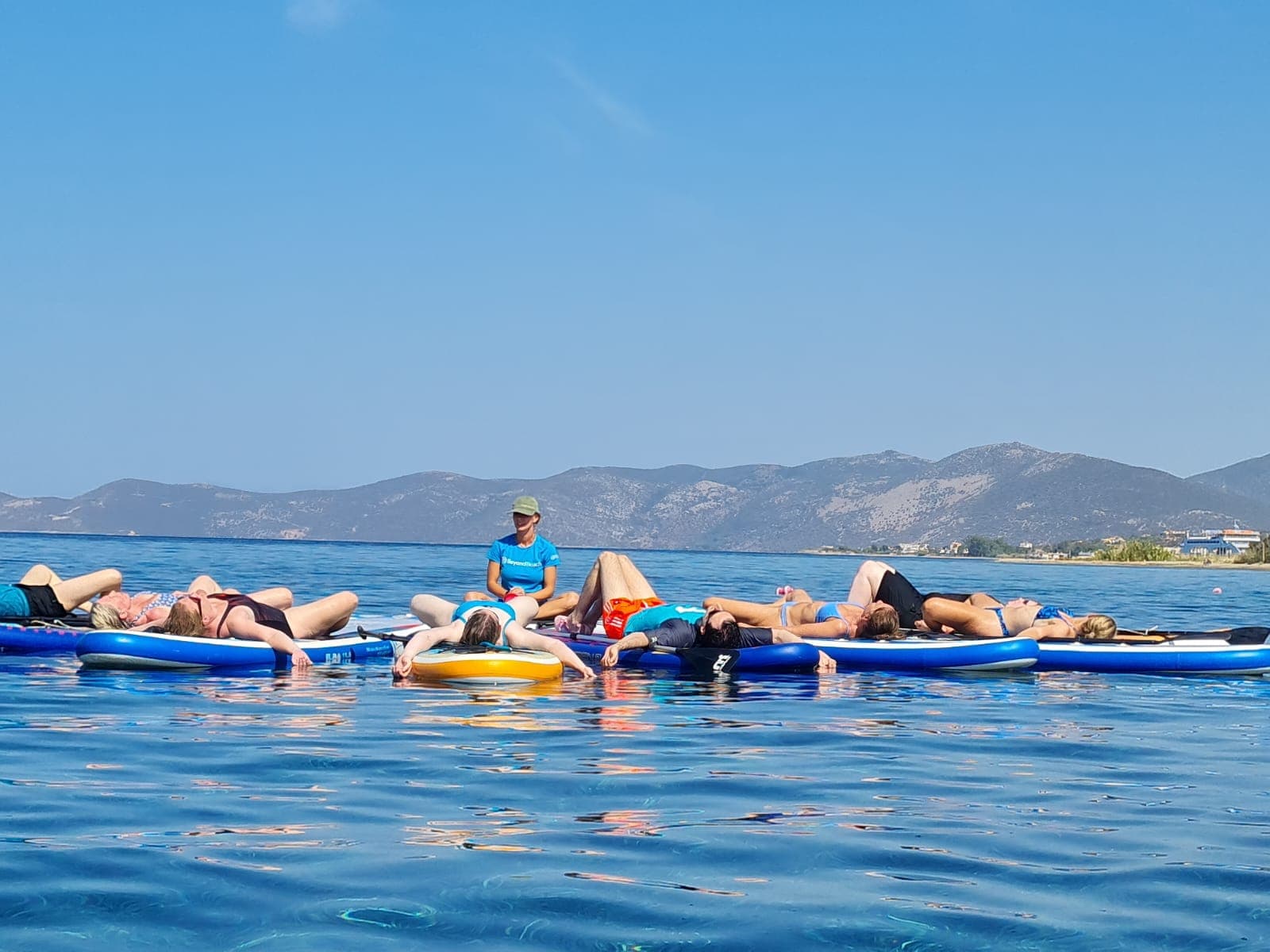
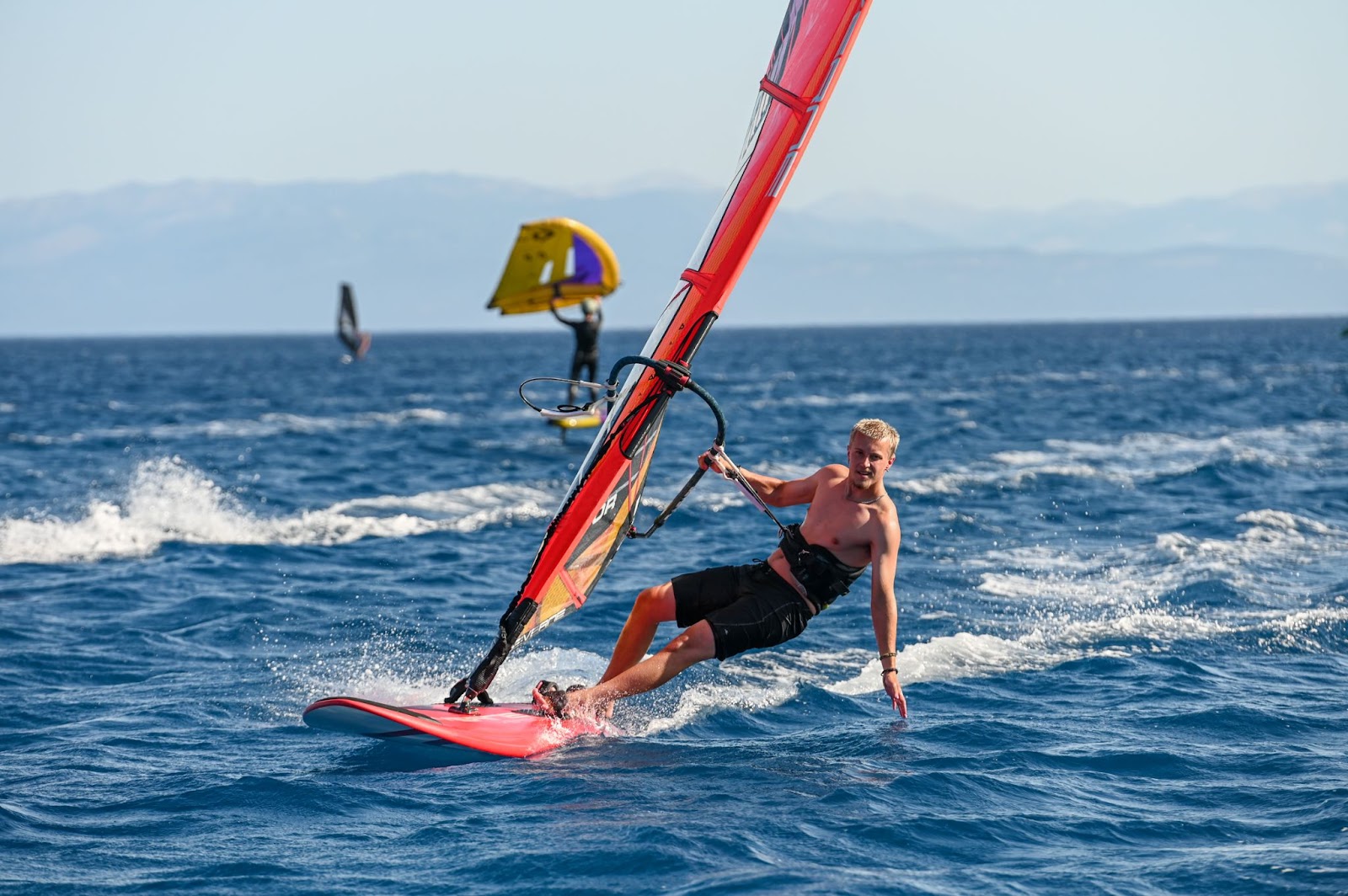
Mornings in Vassiliki offer calm, glassy waters and a light onshore breeze, ideal for teaching beginners, paddleboarders, and early sailing sessions. As the day warms up, the famous thermal wind known as “Eric” kicks in, bringing powerful cross-shore gusts that transform the bay into a playground for intermediate and advanced windsurfers, sailors, and wingfoilers. By late afternoon, it’s not uncommon to see freestyle pros showing off their tricks.
Your options: ways to quailify
There’s not one-size-fits-all when it comes to becoming a watersports instructor. Depending on your goals, location, and the time you have available, there are several different ways to gain your qualifications.
However, to work as an instructor in the UK and aboard at a RYA centre, you need to hold an RYA instructor certificate. Here are the main ways in which you can gain that ticket:
1. Intensive Instructor Courses
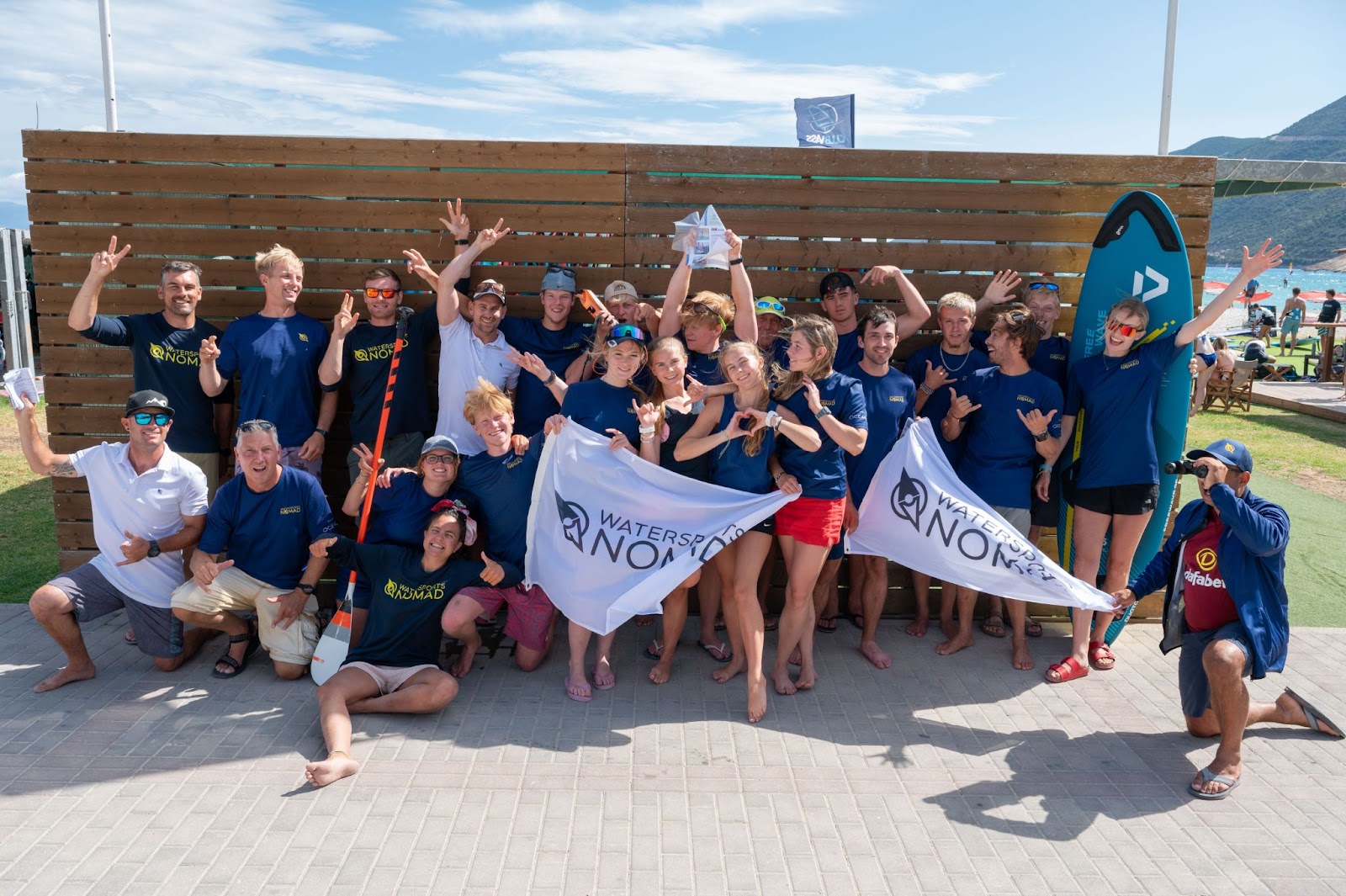
Designed for those who want to fast-track their journey, intensive courses (between 4 to 12 weeks) offer full-time training in one or more disciplines, such as windsurfing, sailing, or wingfoiling. These courses tend to include everything you need to qualify and work as an instructor: real-life teaching experience, professional mentoring to a competent personal level, and certifications like first aid or powerboat handling. Watersports Nomad run these courses from their centre in Vassiliki, Greece.
This tends to be the most popular option as it handles everything you need to become a watersports instructor for one fixed price.
2. Modular Courses
If you can’t commit to a full-time programme, you can qualify in stages. Every RYA instructor needs to hold these qualifications/ requirements:
- First Aid Certificate
- RYA Powerboat Level 2
- Safe and Fun Safeguarding Course
- RYA Membership
- RYA instructor certificate (sailing, wingfoiling or windsurfing)
Watersports centres in the UK and abroad offer many of these courses either modularly or as stand-alone options. This means you can find training that fits around your existing commitments. For example, the RYA Powerboat Level 2 course can be completed over a weekend, while the First Aid Certificate is typically a one-day course. The Instructor Certificate usually takes five days.
Taking courses separately allows for flexibility, ideal for those studying or working alongside their training. However, it can be more logistically challenging to organise compared to enrolling in a full, continuous instructor course.
3. In-House Training at Watersports Centres
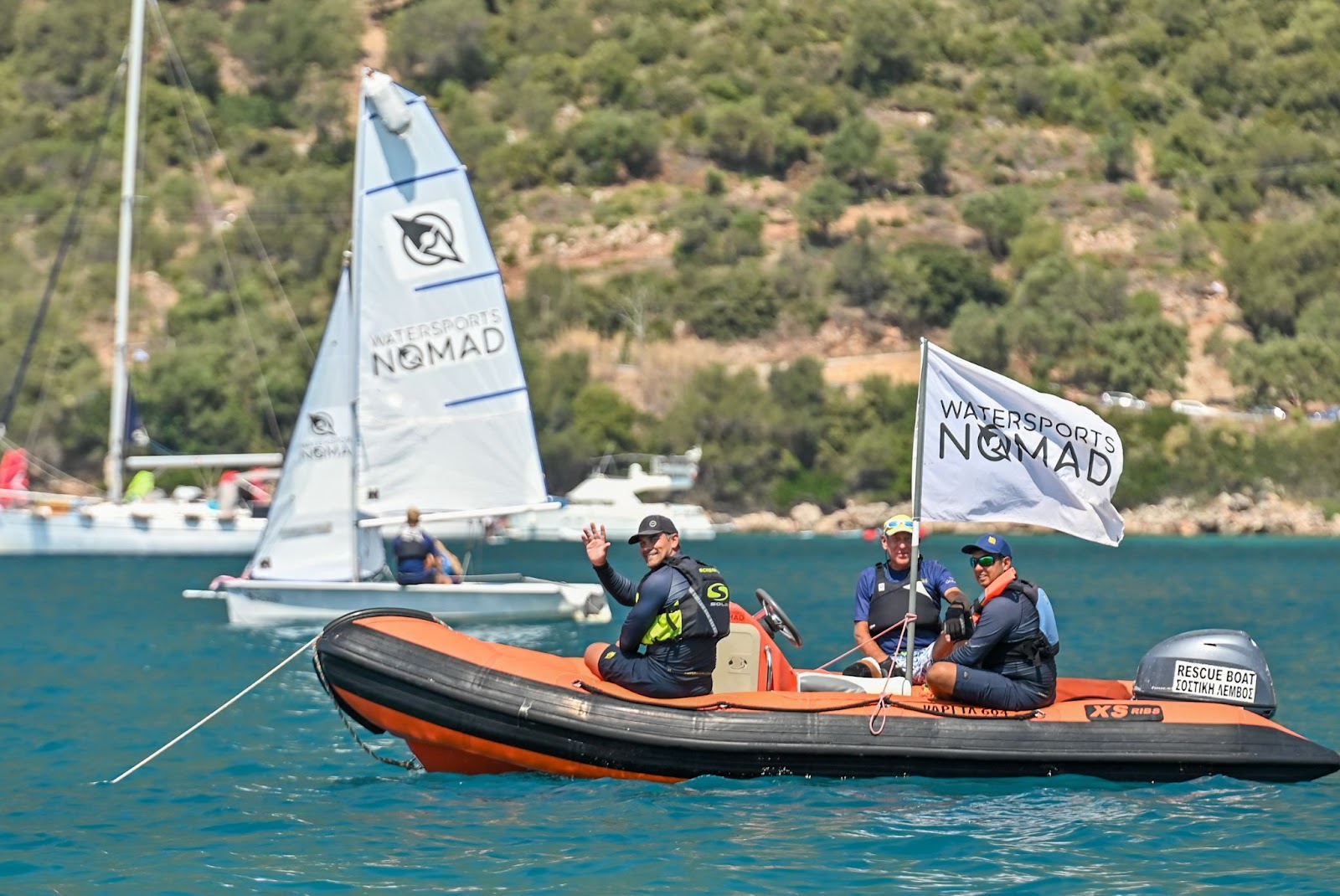
Some centres offer in-house instructor training in exchange for a commitment to work for them during the season. These are great if you’re looking to build experience quickly and get stuck into the industry straight away, but places can be limited, rare and competitive.
4. Instructor Apprenticeships & Work-While-You-Train Schemes
For those looking to earn while they learn, some organisations offer apprenticeship-style programmes where you can train while working at a centre. These often come with longer-term job opportunities and a chance to build industry connections as you qualify.
Working for BeyondBeach in Greece
Once you’re qualified, it’s time to take your ticket and start looking for work.
The process of applying for jobs in the watersports industry can vary depending on where you’re applying. Larger travel companies may have a multi-stage recruitment process, while local sailing or windsurfing centres often keep it simple, just send in a CV and cover letter directly.
At BeyondBeach, we have an application process that includes outlining what you’re looking for, your available dates (as our centres are based outside the UK), and why you want to work with us. If you’re interested in joining one of our beach clubs, you can apply directly through our website.
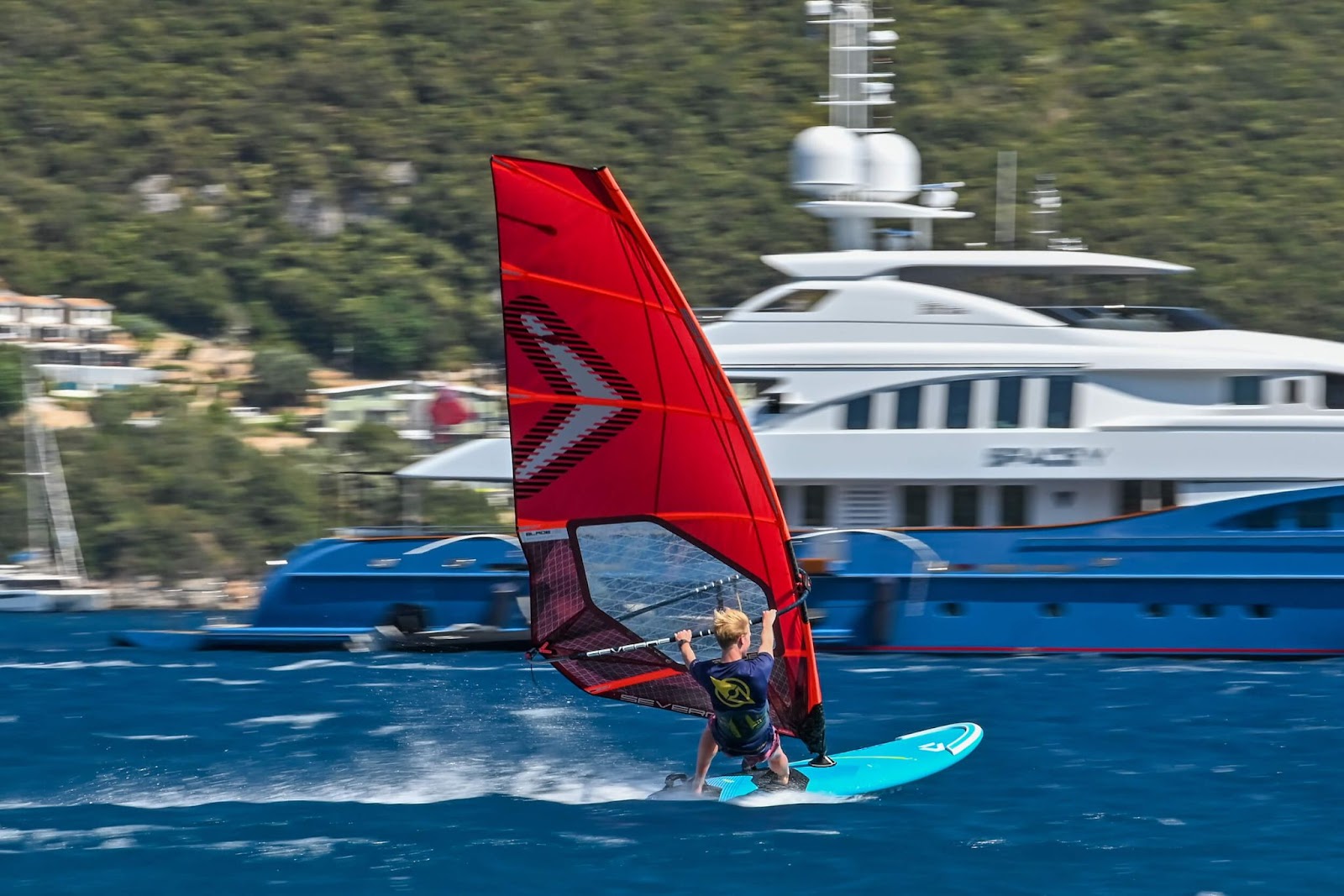
If you’re training through a structured course like Watersports Nomad, your trainers have strong industry links and guide you toward potential roles. Many courses also offer the chance to gain hands-on experience at a working centre, an excellent way to make an impression and potentially walk straight into your first job.
Is It for Me?
Now that you know a bit more about the courses and the lifestyle, you might still be wondering: Is becoming a watersports instructor really for me?
Whether you’re already sure you want to teach others how to windsurf, sail, or wingfoil, or you’re still on the fence, it’s worth knowing that the skills you develop during an instructor course go far beyond the water. Even if you decide not to pursue instructing long-term, the experience can become a valuable stepping stone in your future career.
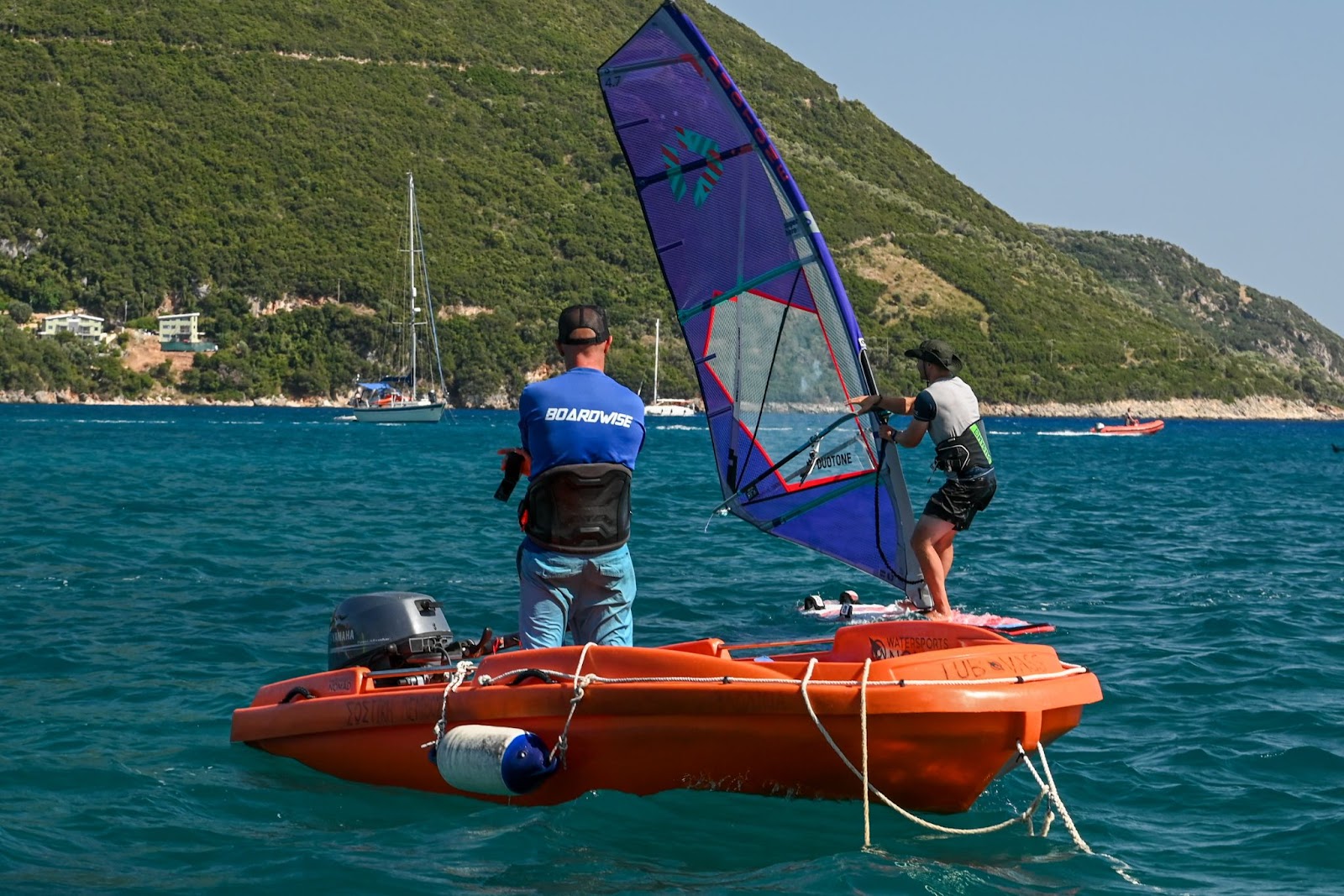
Here are just a few of the transferable skills you’ll gain:
- Public Speaking & Presenting
Learn how to explain ideas clearly and confidently in front of groups, both on land and on the water. - Communication
Break down complex information, adapt to different learning styles, and build rapport with students of all ages. - Teamwork
You’ll work closely with other instructors and centre staff, learning how to collaborate under pressure and support one another. - Problem Solving
Whether it’s reading weather conditions or adapting a session plan, you’ll become comfortable thinking on your feet. - Leadership
Taking responsibility for a group on the water builds trust, authority, and calm decision-making, all key leadership qualities.
How to Get Your Training Started?
If you’re looking to become an instructor, we highly recommend booking a full training course. These courses include everything you need to qualify, plus, they give you valuable experience working in a busy watersports centre.
Watersports Nomad is an experienced and highly rated training centre based in Greece, offering 6, 8, and 12-week instructor courses for complete beginners or a fast track sailing and windsurfing instructor courses for those with prior experience. These programmes take you from complete novice to qualified instructor, with the option to specialise in windsurfing, sailing, or even wingfoiling.
Speak to BeyondBeach and Watersports Nomad today to find the right path for you.